
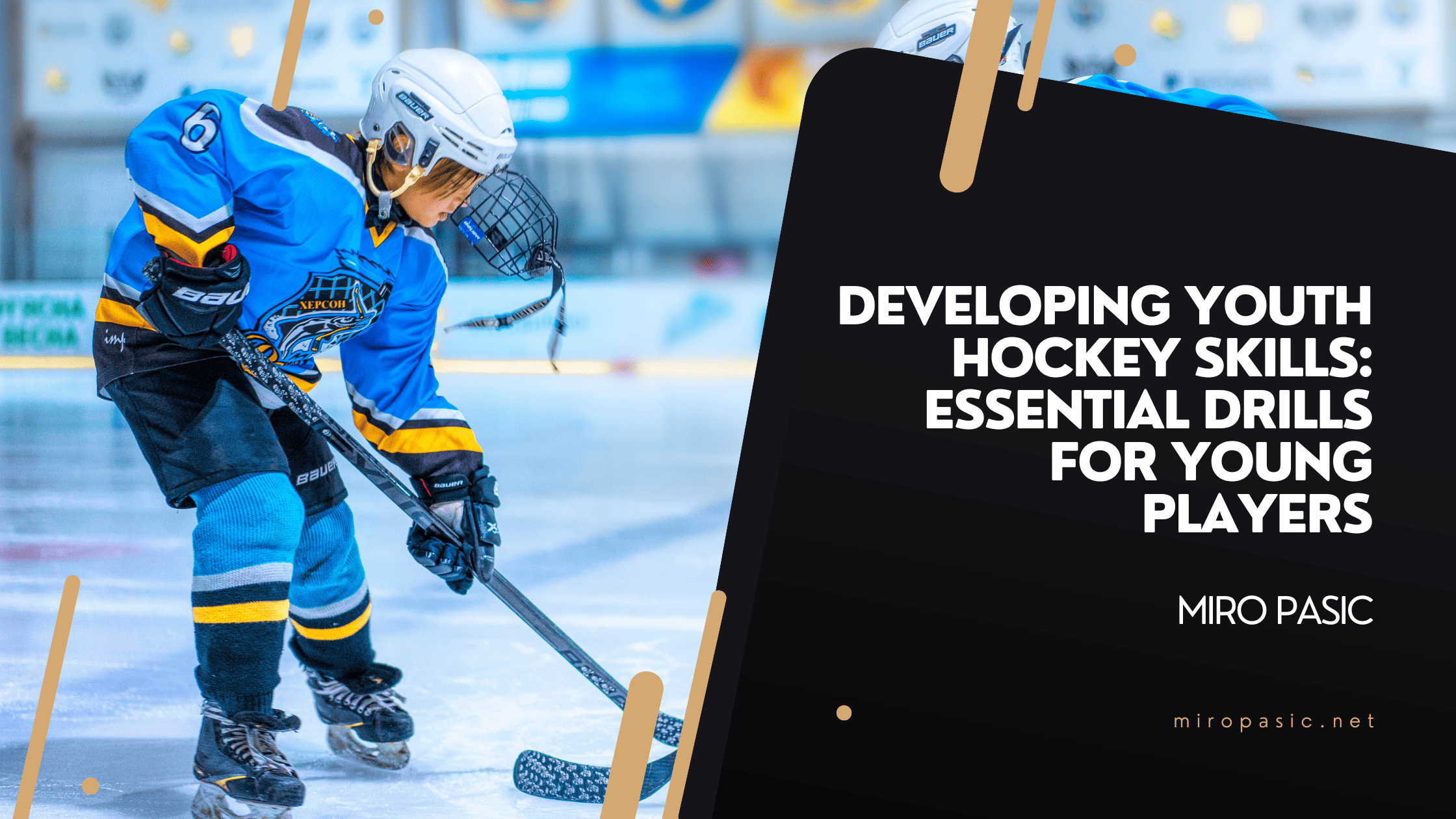
Developing fundamental hockey skills in young players is crucial for their sports growth. Young hockey enthusiasts need to build a strong foundation in basic skills, which can be achieved through targeted drills and consistent practice. This article delves into essential drills that are instrumental in developing youth hockey skills.
- Skating Drills
Skating is the cornerstone of hockey. For young players, mastering skating is paramount. Start with basic forward and backward skating drills to build balance and confidence. Incorporate drills like the ‘Cone Weave,’ where players navigate through cones to improve agility and control. As players progress, introduce more challenging drills, such as tight turns and crossover skating, to enhance maneuverability.
- Puck Control
Puck control, or stickhandling, is another essential skill. Begin with simple drills where players move the puck back and forth in a straight line. As they advance, they include more complex patterns and obstacles. The ‘Obstacle Course’ drill, where players maneuver the puck around cones, helps improve hand-eye coordination and puck handling under varying conditions.
- Passing and Receiving
Effective passing and receiving are vital for team play. Start with basic stationary passing drills, focusing on both forehand and backhand passes. Gradually introduce movement, having players pass while skating. The ‘Pass and Follow’ drill, where players pass the puck and skate to the receiving position, is excellent for developing passing accuracy and timing.
- Shooting Techniques
Shooting is an exciting skill for young players to learn. Start with stationary shooting drills focusing on wrist shots and backhand shots, emphasizing accuracy over power. As players become more comfortable, introduce moving shots and slap shots. The ‘Shoot and Rebound’ drill, where players shoot at the goal and then collect their rebound for a second shot, develops shooting skills and quick reactions to game-like scenarios.
- Game Situation Drills
Young players need to understand game situations. Drills like ‘3-on-2’ or ‘2-on-1’ help players learn positioning, decision-making, and teamwork. These drills simulate real game scenarios, teaching players how to react under pressure.
- Defensive Skills
Teaching young players defensive techniques is crucial. Drills like ‘One-on-One’ and ‘Gap Control’ teach players how to defend effectively, focusing on body positioning and stick placement.
- Fun and Engaging Drills
Lastly, ensuring that drills are fun and engaging is key to maintaining interest and enthusiasm. Incorporate games and competitions within drills to keep young players motivated.
In conclusion, developing youth hockey skills requires a focus on fundamental drills that are age-appropriate and engaging. Coaches can effectively nurture young talent by emphasizing skating, puck control, passing, shooting, game situation awareness, and defensive skills. Regular practice, combined with a fun and supportive environment, will help young players flourish in hockey.